Why Concrete Septic Tanks Resist Floating in High Water Tables
August 21, 2026
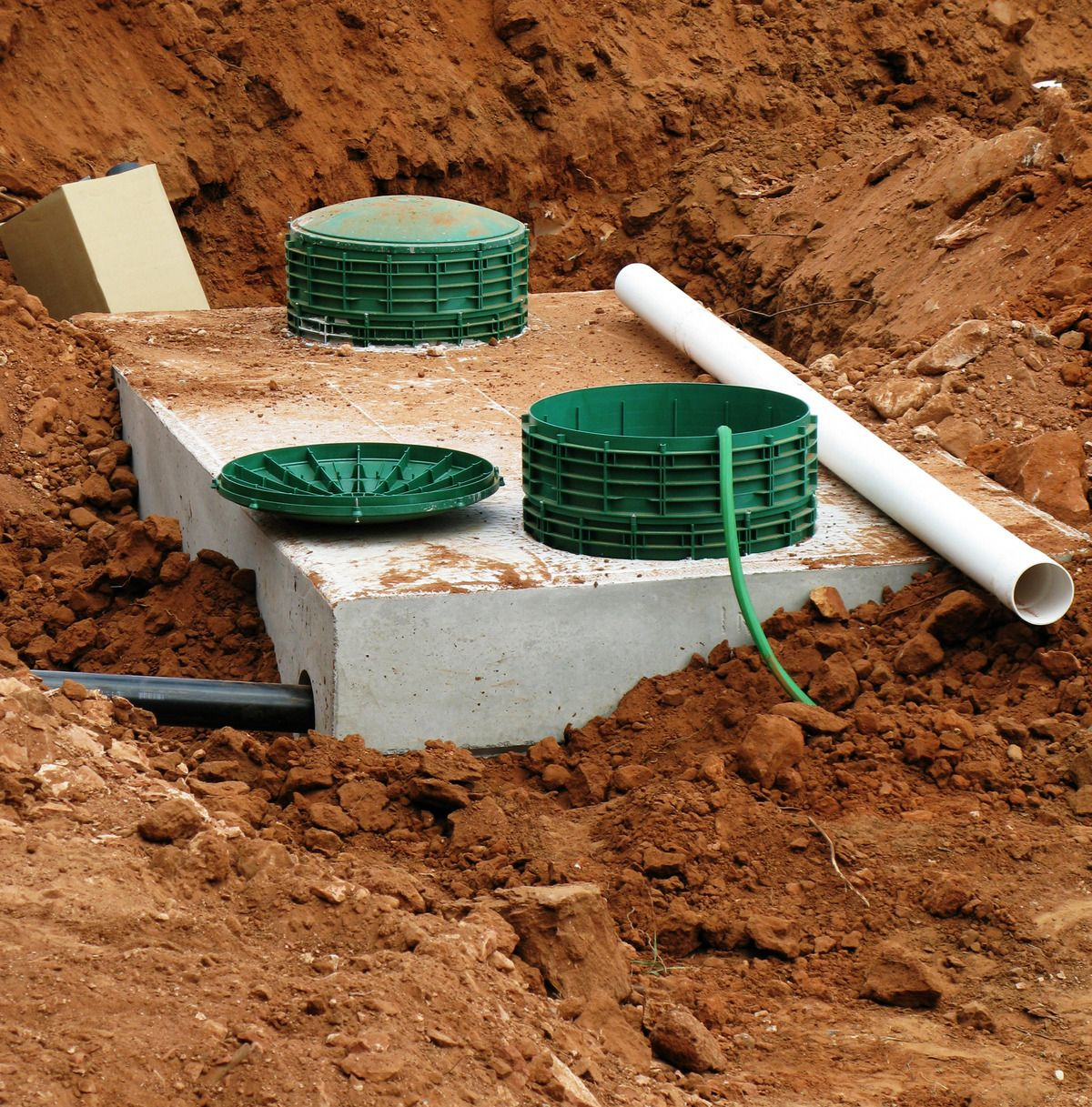
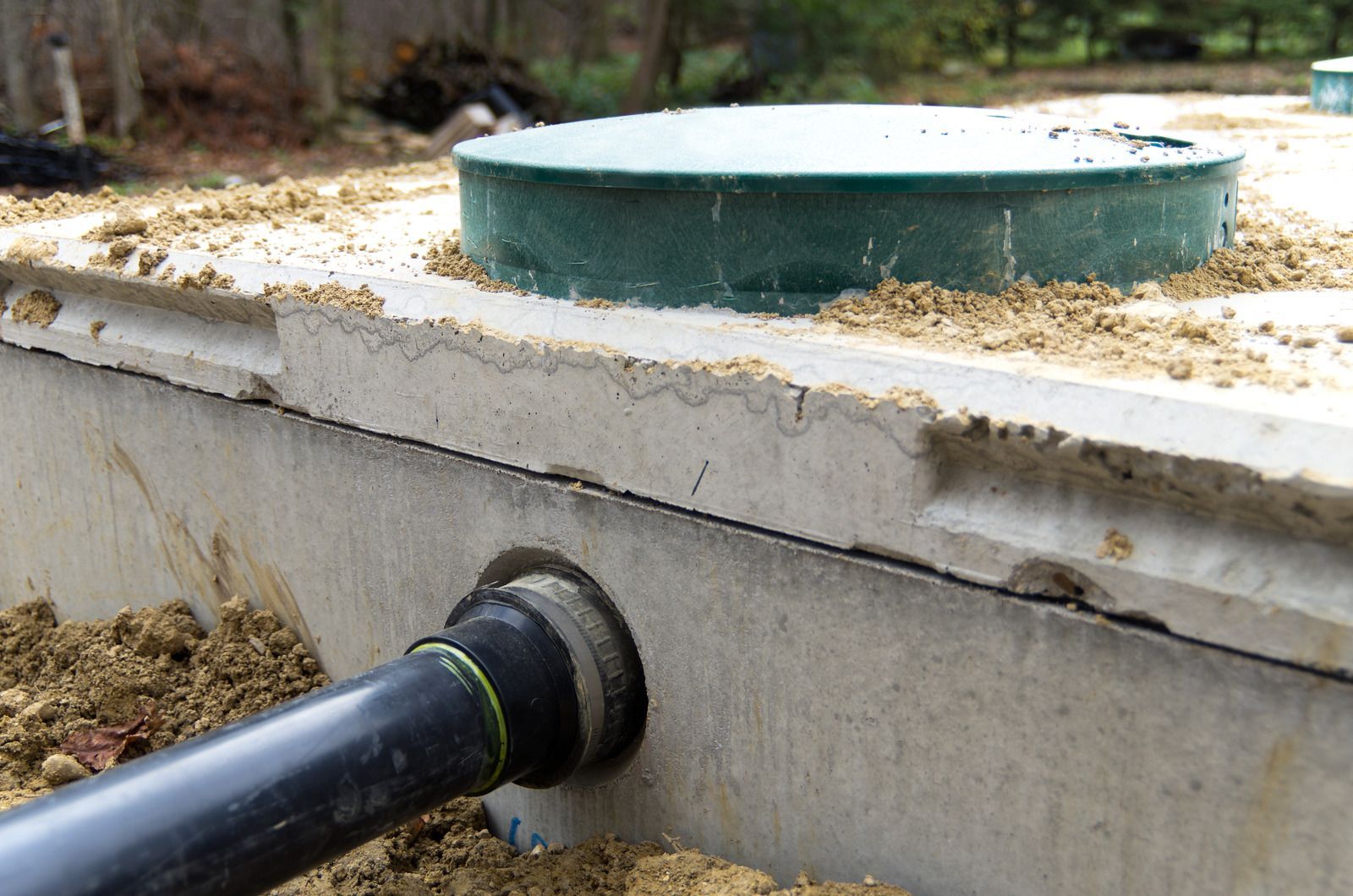
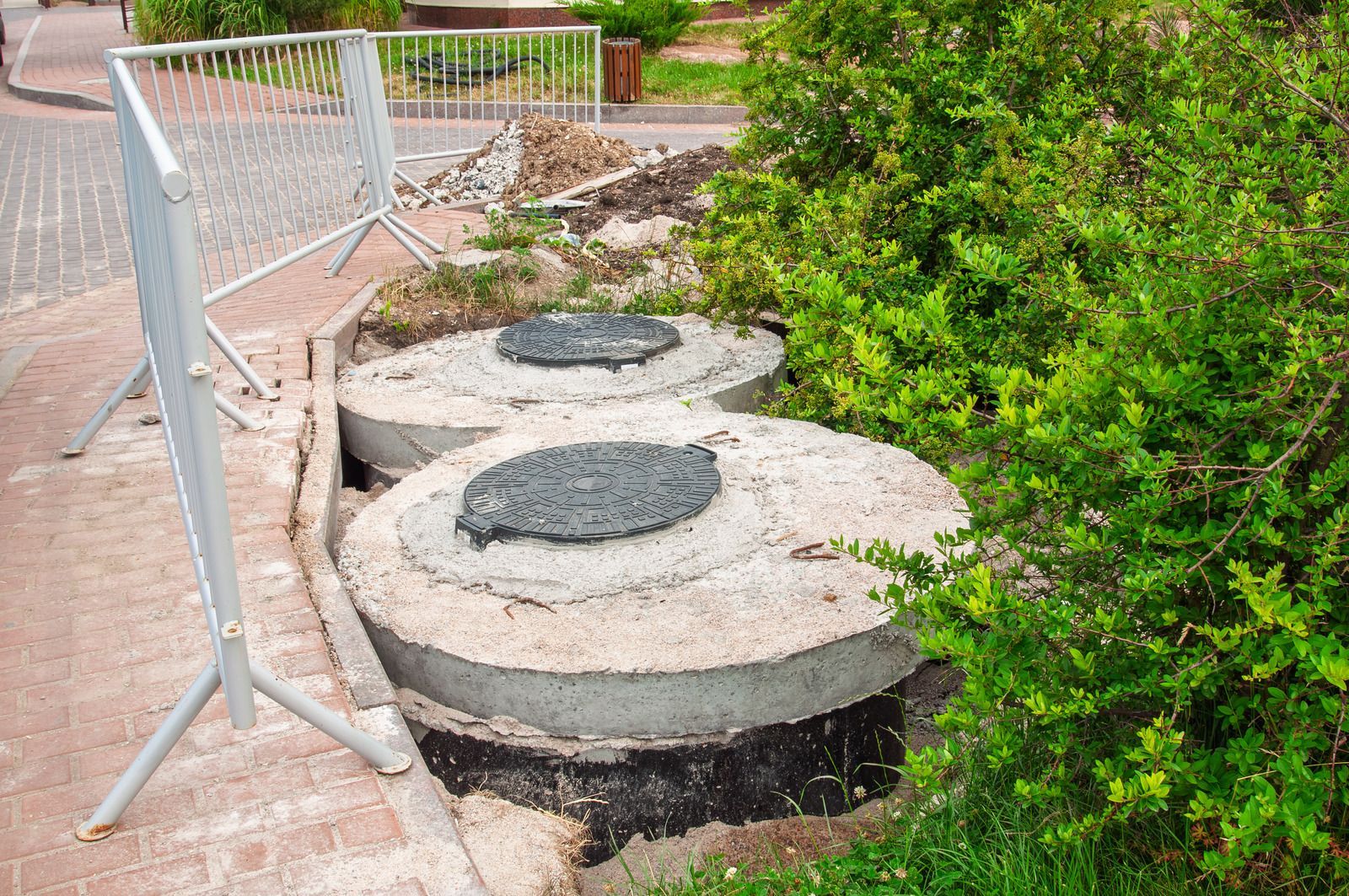
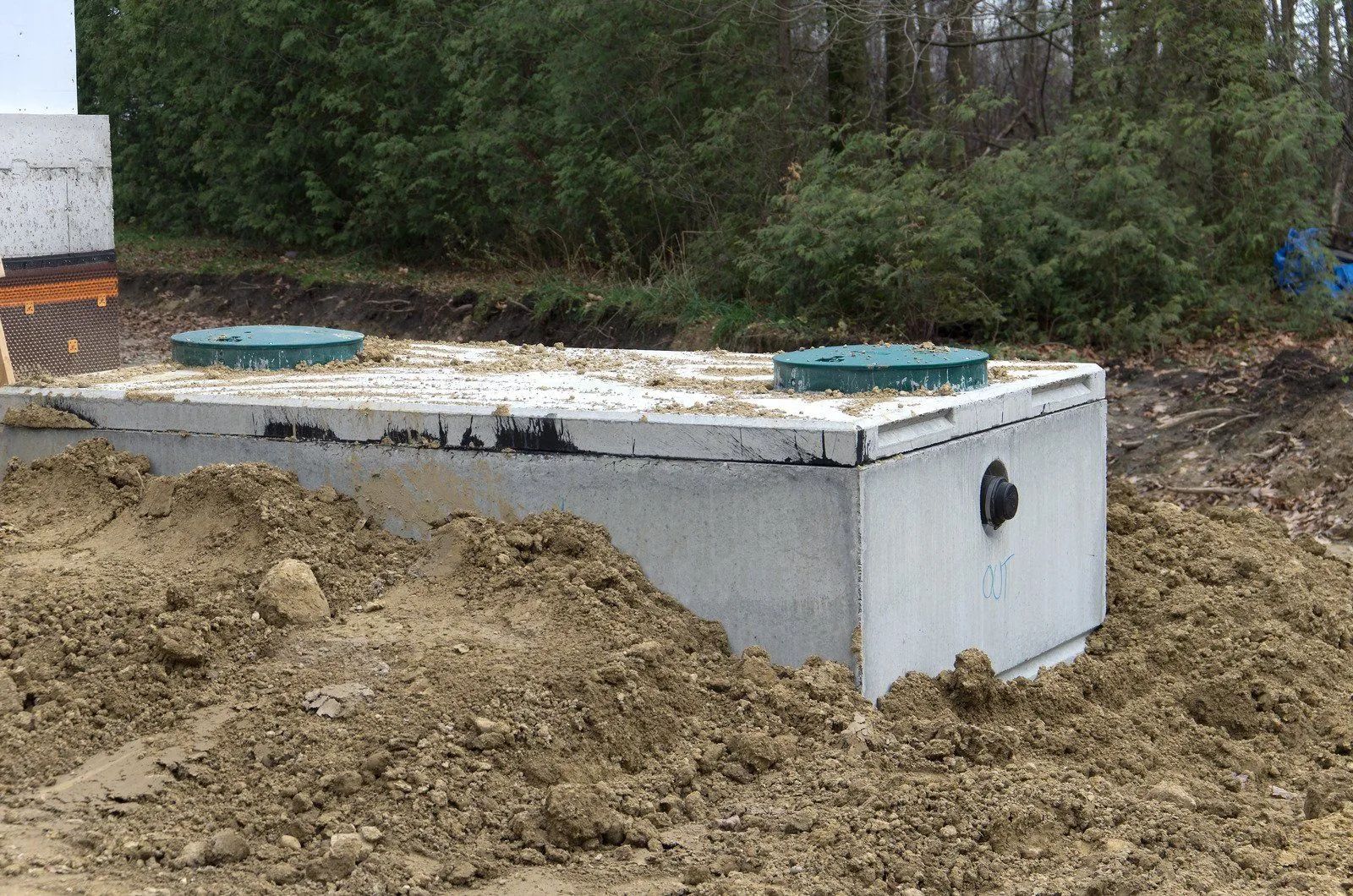
Quick Answer: A concrete septic tank resists floating because its mass consistently outweighs the buoyant force that saturated soil pushes against it. Concrete has a specific gravity around 2.4, meaning it weighs roughly 150 pounds per cubic foot, more than twice the 62.4 pounds per cubic foot of the water trying to lift it. A typical 1,000-gallon concrete tank weighs several tons empty, so even when groundwater fully surrounds it, the tank's own weight plus the soil covering it usually generates enough downward force to keep it in place. Lighter tank materials do not have that built-in margin and depend far more heavily on anchoring to stay put. In Southwest Michigan, where glacial clay and sand layers hold a seasonal water table close to the surface, that weight advantage is the difference between a tank that stays buried and one that does not.
You pull the tank specs for a new installation and the site notes mention groundwater sitting three feet down for most of the spring. The excavator has not broken ground yet, but the question is already on the table: will this tank stay where it is set once the hole floods back in during the next thaw? For anyone who has watched a lightweight tank shift after a wet spring, the question is not academic. It decides whether a system works quietly for decades or becomes a call-back before the first winter is over.
Every buried tank sits in the same physical relationship with the ground around it. Water pushes up. Weight pushes down. Which force wins determines whether the tank stays put or works its way toward the surface. Concrete wins that contest by a wide margin, and the reason comes down to one number: how much a cubic foot of the material actually weighs compared to the water trying to move it.
Pick ready mix when the concrete has to be one continuous piece tied into the ground. Footings, foundation walls, garage slabs, basement floors, and driveways all want a monolithic pour that bonds to rebar and the surrounding structure as a single unit. Custom shapes belong here too. If the geometry is one of a kind, no mold exists for it, so you place it wet and form it on site.
Large flatwork is the clearest case. A driveway in Van Buren County moving across an uneven base needs to be poured, screeded, and finished in one working window so you never get a cold joint where two pours meet and later split apart.
What Actually Makes a Buried Tank Float
A tank floats for the same reason a boat floats or a pool toy pops back to the surface. Any object submerged in water experiences an upward force equal to the weight of the water it displaces. Engineers call this the buoyant force, and it applies to a septic tank exactly the way it applies to anything else buried below the water table.
The tank does not need to be underwater to float
Saturated soil behaves almost like water once it is fully waterlogged. When the seasonal water table rises above the bottom of the tank, the soil around it carries enough water pressure to lift a tank that is not heavy enough to resist it.
Empty tanks are the most vulnerable
A full tank has the added weight of the wastewater inside it working in its favor. The highest-risk moment comes right after a tank is pumped, or during construction before backfill and connections are complete, when there is little or nothing inside the tank to add downward weight.
The soil above the tank matters as much as the tank itself
Once backfill is in place, its weight presses down on the tank lid. But if that soil also becomes saturated, part of its weight gets canceled out by its own buoyancy, so cover depth alone is not a guarantee against flotation.
What Southwest Michigan Winters Do to the Decision
| Decision Factor | Ready Mix | Precast |
|---|---|---|
| Best for shape | Custom, monolithic, tied to rebar | Standard, repeatable units |
| Cure environment | Open air on your site | Controlled yard, steady conditions |
| Install speed | Days to gain strength before use | Set and ready fast |
| Site access need | Truck path plus washout area | Crane or boom plus firm ground |
| Weather sensitivity | High during the pour and cure | Low, cured before delivery |
| Quality consistency | Depends on field conditions | Uniform batch to batch |
The Weight Advantage Concrete Brings to the Ground
Every material used for septic tanks has a specific gravity, a simple ratio that compares its density to the density of water. Water is the baseline at 1.0. Anything above that sinks and stays down under its own weight. Anything at or below that floats or hovers.
Concrete sits well above the water line
A properly cured concrete septic tank has a specific gravity around 2.4, which works out to roughly 150 pounds per cubic foot. Water weighs 62.4 pounds per cubic foot. That means a cubic foot of concrete weighs more than twice as much as the cubic foot of water it displaces, and that ratio holds true for the entire tank, not just a section of it.
A standard tank carries a meaningful amount of that mass
A 1,000-gallon precast concrete tank commonly weighs in the range of 8,000 to 10,000 pounds empty. Spread that weight against the buoyant force of the water it displaces, and the tank has a substantial built-in cushion before flotation becomes a real possibility.
Lighter materials do not get that cushion
Polyethylene, the plastic most tanks are rotomolded from, has a specific gravity close to 0.97, just under water. A tank built from it has almost no built-in resistance to floating and depends on external anchoring to stay in the ground once the soil saturates. Concrete's advantage is not a design feature added on top of the tank. It is a property of the material itself.
Tip:
If you are comparing tank options for a property with any history of standing water or a shallow well casing, ask for the tank's actual shipping weight, not just its gallon capacity. Two tanks holding the same volume of wastewater can have very different resistance to flotation depending on what they are made from and how thick the walls are poured.
What Southwest Michigan Winters Do to the Decision
| Decision Factor | Ready Mix | Precast |
|---|---|---|
| Best for shape | Custom, monolithic, tied to rebar | Standard, repeatable units |
| Cure environment | Open air on your site | Controlled yard, steady conditions |
| Install speed | Days to gain strength before use | Set and ready fast |
| Site access need | Truck path plus washout area | Crane or boom plus firm ground |
| Weather sensitivity | High during the pour and cure | Low, cured before delivery |
| Quality consistency | Depends on field conditions | Uniform batch to batch |
How the Numbers Actually Get Checked
Installers and site engineers do not just assume a heavy tank is safe. But a heavy tank does make the math easier to pass. When a site has a known high water table, the standard practice is to run an actual buoyancy calculation before the tank ever goes in the ground.
The calculation compares two totals
On one side is the buoyant force, the weight of water the fully submerged tank would displace. On the other side is the combined downward force of the empty tank's weight, any water already sitting in it, and the weight of the soil covering it. A widely used design guideline from the University of Minnesota's Onsite Sewage Treatment Program calls for the downward forces, reduced by a 10 percent safety margin, to exceed the buoyant force before a tank is considered stable.
Soil type changes the math
Sandy soil weighs around 120 pounds per cubic foot, while clay soil runs closer to 90 pounds per cubic foot when accounting for its own water displacement. A site with heavier, sandier cover soil gets more downward force per foot of backfill than a site sitting in wet clay, which is one more reason two properties a few miles apart can need different installation approaches even with the same tank.
Concrete's mass does most of the work before the calculation even starts
Because a concrete tank already weighs several times more than an equivalent plastic tank, it typically clears the buoyancy check with soil cover alone, where a lighter tank often needs additional anchoring just to reach the same safety margin.
What Southwest Michigan Winters Do to the Decision
| Decision Factor | Ready Mix | Precast |
|---|---|---|
| Best for shape | Custom, monolithic, tied to rebar | Standard, repeatable units |
| Cure environment | Open air on your site | Controlled yard, steady conditions |
| Install speed | Days to gain strength before use | Set and ready fast |
| Site access need | Truck path plus washout area | Crane or boom plus firm ground |
| Weather sensitivity | High during the pour and cure | Low, cured before delivery |
| Quality consistency | Depends on field conditions | Uniform batch to batch |
Why Southwest Michigan's Ground Makes This More Than a Formality
This region's geology is not a minor detail in the flotation question. It is the reason the question comes up at all on so many local properties.
Glacial soil layers hold water close to the surface
Van Buren, Kalamazoo, and the surrounding counties sit on glacial deposits that mix fine clays with pockets of sand and gravel. The clay-heavy areas drain slowly, and where sand sits over a clay layer, water perches on top of it rather than draining away, keeping the seasonal water table high for weeks at a stretch after spring melt and heavy rain.
The water table moves throughout the year, not just during floods
A lot that looks dry in August can sit with groundwater a foot or two below the surface in April. Site evaluations that only check conditions during a dry season routinely underestimate how high the water actually gets, which is exactly the scenario that catches a lightweight tank off guard.
Freeze-thaw cycling adds a second layer of movement
Michigan winters push the frost line deep into the ground, and the freezing and thawing cycle shifts soil around anything buried in it. A tank that is barely stable against flotation in summer conditions has less margin left over to also handle the seasonal ground movement that freeze-thaw produces.
Put those two factors together and the case for mass becomes practical rather than theoretical. A tank with two or three times the weight advantage of a lightweight alternative is simply working with a larger buffer against a water table that regularly tests that buffer.
What Southwest Michigan Winters Do to the Decision
| Decision Factor | Ready Mix | Precast |
|---|---|---|
| Best for shape | Custom, monolithic, tied to rebar | Standard, repeatable units |
| Cure environment | Open air on your site | Controlled yard, steady conditions |
| Install speed | Days to gain strength before use | Set and ready fast |
| Site access need | Truck path plus washout area | Crane or boom plus firm ground |
| Weather sensitivity | High during the pour and cure | Low, cured before delivery |
| Quality consistency | Depends on field conditions | Uniform batch to batch |
When Even a Heavy Tank Still Needs Anchoring
Concrete's weight is a real advantage, but it is not an automatic pass on every site. Extremely high water tables, unusually large tanks, or shallow burial depths can still push the buoyant force high enough to warrant extra measures.
Anchoring straps and deadmen tie the tank to fixed ground. On sites where the buoyancy calculation comes out tight even with a concrete tank, installers add mechanical anchors, straps or cables secured to buried concrete deadmen, to provide additional holding force beyond the tank's own weight.
Adequate soil cover has to be reached before the tank is considered secure
A tank sitting in a partially backfilled hole during a heavy rain event is at its most vulnerable, regardless of what it is made from. Installation sequencing, getting to full design cover depth promptly, matters as much as the material choice itself.
Dewatering during construction reduces the risk window
On sites where groundwater is actively seeping into the excavation, pumping the hole down during installation keeps the buoyant force lower while the tank is being set and connected, before its own weight and the backfill are doing the full job of holding it down.
What Southwest Michigan Winters Do to the Decision
| Decision Factor | Ready Mix | Precast |
|---|---|---|
| Best for shape | Custom, monolithic, tied to rebar | Standard, repeatable units |
| Cure environment | Open air on your site | Controlled yard, steady conditions |
| Install speed | Days to gain strength before use | Set and ready fast |
| Site access need | Truck path plus washout area | Crane or boom plus firm ground |
| Weather sensitivity | High during the pour and cure | Low, cured before delivery |
| Quality consistency | Depends on field conditions | Uniform batch to batch |
What Happens When a Tank Loses That Contest
A tank that floats does not settle quietly back into place once the water recedes. It typically shifts enough to strain or snap the pipe connections at the inlet and outlet, since those connections were set for one fixed position and were never designed to flex.
Most people picture a floated tank as a dramatic scene, half a tank poking out of the yard after a storm. It usually is not that visible. A tank can rise just an inch or two, enough to shear a joint underground while the lid still sits flush with the grass.
Warning:
A tank that has floated even a few inches should be treated as a compromised system, not a cosmetic problem. Broken or displaced pipe connections release wastewater directly into the surrounding soil, and a tank that has shifted out of its original grade can also throw off the flow calculations the entire drainfield was designed around. If you notice a tank lid sitting higher than it used to, standing water pooling unusually around the tank location after rain, or slow drainage that started after a wet season, have the system inspected before assuming it is a simple maintenance issue.
Frequently Asked Questions
Why does concrete resist floating better than plastic septic tanks?
Concrete is much denser than water, giving septic tanks substantial built-in weight against buoyancy. Plastic tanks are lighter, so they generally depend more heavily on anchoring when groundwater rises significantly.
Can a concrete septic tank still float in a high water table?
Yes, although it is less likely. Extremely high groundwater, shallow burial, or insufficient soil cover can create enough buoyant force to move concrete tanks, making proper site calculations especially important.
How do installers know if a specific site needs anti-flotation measures?
Installers compare the tank, wastewater, and soil weight against the expected buoyant force. When downward weight lacks a sufficient safety margin, anchoring or additional approved measures may be required onsite.
Why does Southwest Michigan see more of these flotation concerns than drier regions?
Southwest Michigan has glacial clay and sand layers that can hold seasonal groundwater near the surface. Spring thaw and heavy rainfall increase saturation, creating stronger buoyant forces around buried tanks.
Is an empty tank more likely to float than a full one?
Yes. Wastewater adds significant downward weight, helping resist buoyancy. Empty tanks have less weight holding them down, making installation and the period immediately after pumping particularly vulnerable to high groundwater.
What Southwest Michigan Winters Do to the Decision
| Decision Factor | Ready Mix | Precast |
|---|---|---|
| Best for shape | Custom, monolithic, tied to rebar | Standard, repeatable units |
| Cure environment | Open air on your site | Controlled yard, steady conditions |
| Install speed | Days to gain strength before use | Set and ready fast |
| Site access need | Truck path plus washout area | Crane or boom plus firm ground |
| Weather sensitivity | High during the pour and cure | Low, cured before delivery |
| Quality consistency | Depends on field conditions | Uniform batch to batch |
Concrete Weight Keeps Septic Systems Grounded
Concrete septic tanks offer a natural advantage in areas where groundwater rises seasonally because their substantial weight provides dependable resistance against buoyant forces. In Lawton, MI, changing water tables and saturated soil can place considerable upward pressure on buried tanks, particularly during spring thaw or extended periods of rainfall. Proper sizing, burial depth, soil cover, and installation practices work together with concrete’s density to create a stable system that remains securely positioned through changing ground conditions.
With 41
years of experience, Dave’s Concrete Products
understands how Southwest Michigan’s soil and groundwater conditions influence septic tank performance. Concrete’s inherent mass provides a valuable margin of stability without relying entirely on external anchoring, while careful installation further protects connections and system alignment. When the tank is matched appropriately to the site and installed with groundwater conditions in mind, its weight becomes a lasting advantage, helping the entire septic system remain stable through wet seasons and changing conditions.