Concrete vs Plastic vs Fiberglass Septic Tank: Which Holds Up Longest?
July 11, 2026
Quick Answer: All three materials can hold wastewater for decades, but concrete typically lasts the longest, often 40 to 50 years, because its weight and rigidity resist floating in a high water table and shrug off the pressures of being buried. Plastic tanks are light and corrosion-proof, yet they can float in saturated ground and generally last 20 to 40 years. Fiberglass sits in the middle: rigid and corrosion-resistant, usually 30 to 40 years, with less floating risk than plastic but nowhere near the mass of concrete. In ground that freezes deep and holds water, mass and rigidity are what carry a tank through the decades.
You are staring at a hole in the yard, a failed tank getting pulled out or a new build about to go in, and a supplier has just asked which material you want underground for the next thirty or forty years. Concrete, plastic, or fiberglass. It sounds like a simple pick until you realize this is the one part of the septic system you never want to think about again once it is buried. Get it right and it disappears from your life. Get it wrong and you are back at this same hole far sooner than you should be.
The honest answer is that all three materials can do the job, and each has a set of conditions where it makes sense. But "which holds up longest" has a real answer once you look at how each material behaves in the ground, how it reacts to water and load, and how it ages over the decades it spends buried. Here is what separates them, and why the ground under Southwest Michigan pushes the decision in a particular direction.
Pick ready mix when the concrete has to be one continuous piece tied into the ground. Footings, foundation walls, garage slabs, basement floors, and driveways all want a monolithic pour that bonds to rebar and the surrounding structure as a single unit. Custom shapes belong here too. If the geometry is one of a kind, no mold exists for it, so you place it wet and form it on site.
Large flatwork is the clearest case. A driveway in Van Buren County moving across an uneven base needs to be poured, screeded, and finished in one working window so you never get a cold joint where two pours meet and later split apart.
What "Holds Up Longest" Actually Measures
Longevity in a septic tank is not one number. A tank can fail because the walls crack and leak, because it floats out of position and snaps its pipe connections, because the material corrodes from the inside, or because something crushes it from above. Each material has a different weak point, so comparing them means comparing how each one resists the specific stresses your site puts on it.
Two things stay the same no matter which material you choose. Every tank needs pumping every three to five years to keep solids from escaping into the drainfield, and every tank does the same job of holding wastewater long enough for solids to settle before the liquid moves on. The material does not change how the system treats waste. What it changes is how the tank survives the ground it is buried in.
What Southwest Michigan Winters Do to the Decision
| Decision Factor | Ready Mix | Precast |
|---|---|---|
| Best for shape | Custom, monolithic, tied to rebar | Standard, repeatable units |
| Cure environment | Open air on your site | Controlled yard, steady conditions |
| Install speed | Days to gain strength before use | Set and ready fast |
| Site access need | Truck path plus washout area | Crane or boom plus firm ground |
| Weather sensitivity | High during the pour and cure | Low, cured before delivery |
| Quality consistency | Depends on field conditions | Uniform batch to batch |
Concrete: Mass That Works in Your Favor
Concrete has been the default septic tank material for over a century, and the reasons show up clearly when you look at its numbers.
Lifespan measured in decades
Properly manufactured and installed concrete septic tanks commonly last 40 to 50 years or longer. Their proven durability makes them one of the most reliable long-term options for residential wastewater systems.
Weight that resists floating
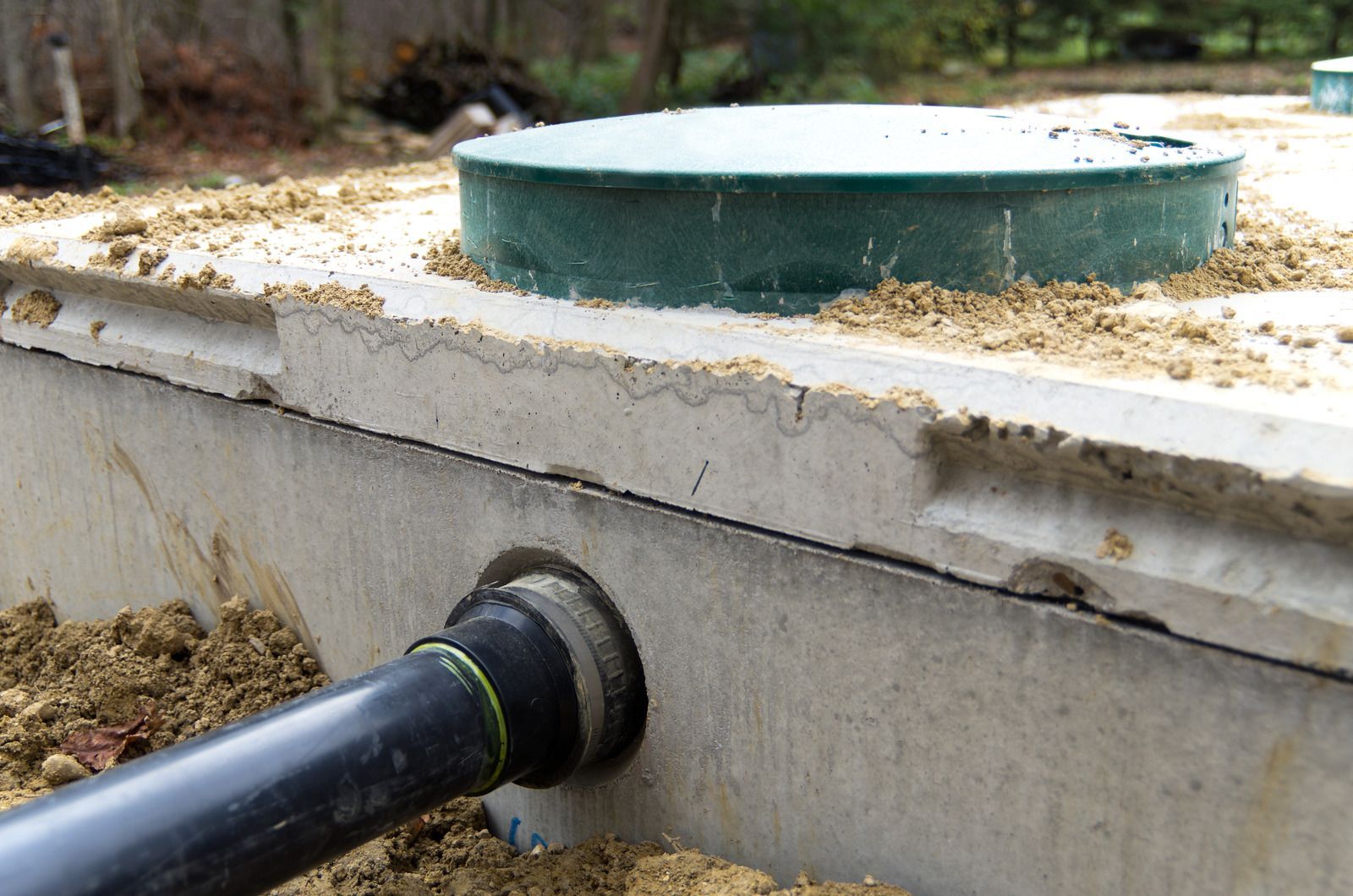
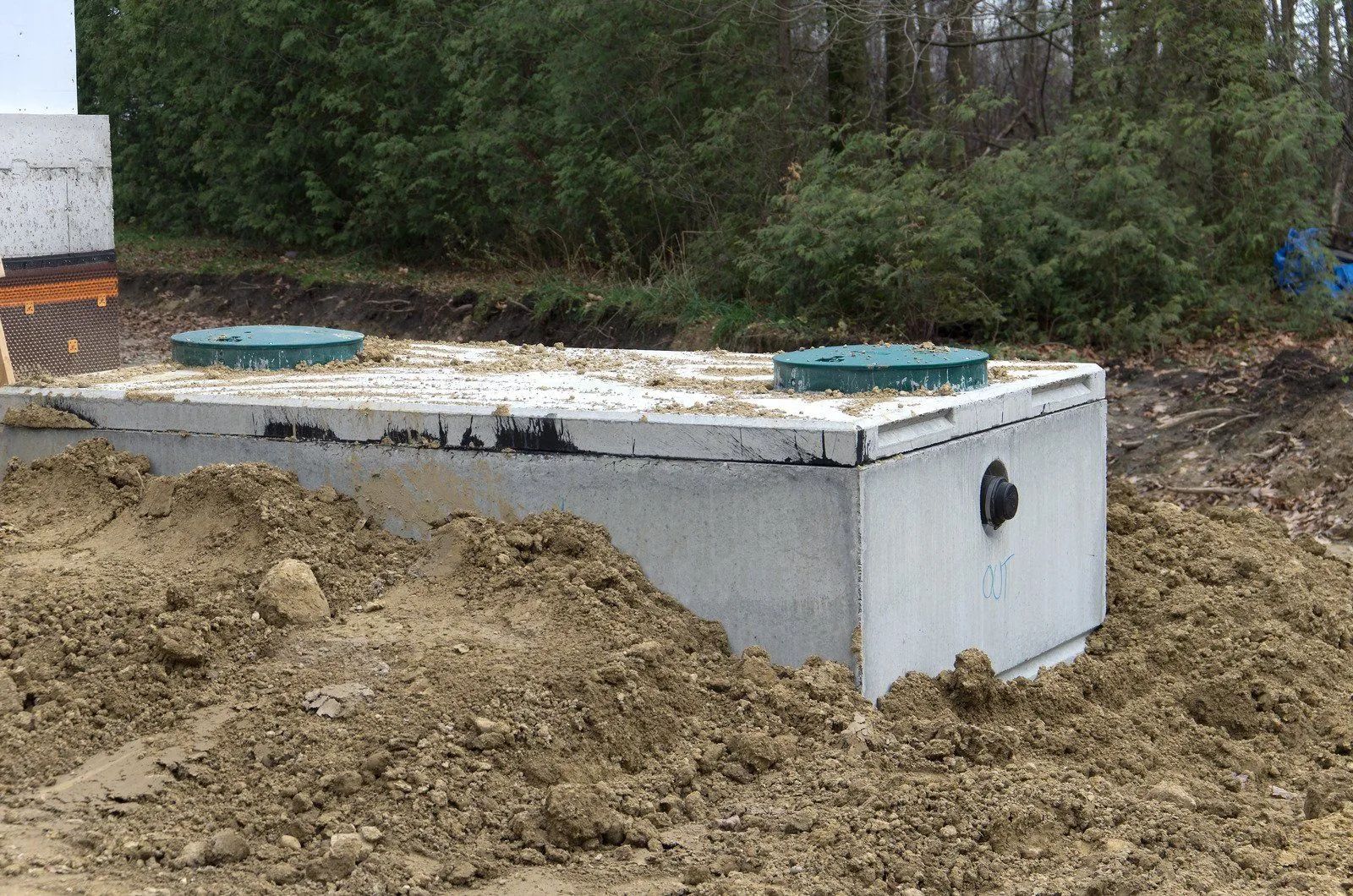
Concrete's substantial weight keeps the tank securely in place, even when surrounding soil becomes saturated. This natural stability greatly reduces the risk of flotation in areas with high groundwater or heavy rainfall.
Strength under load
Concrete tanks provide excellent structural strength and resist deformation under properly managed surface loads. Their rigid construction makes them well suited for properties where occasional vehicle or equipment traffic may occur nearby.
Repairable when it matters
Unlike many lightweight tanks, concrete tanks can often be repaired if small cracks are discovered early. Prompt repairs help extend the tank's service life and may avoid the need for complete replacement.
The trade-off: corrosion above the waterline
Hydrogen sulfide gas can slowly erode concrete surfaces above the wastewater level over many years. Regular septic pumping helps reduce corrosion, protecting the tank and extending its overall lifespan.
What Southwest Michigan Winters Do to the Decision
| Decision Factor | Ready Mix | Precast |
|---|---|---|
| Best for shape | Custom, monolithic, tied to rebar | Standard, repeatable units |
| Cure environment | Open air on your site | Controlled yard, steady conditions |
| Install speed | Days to gain strength before use | Set and ready fast |
| Site access need | Truck path plus washout area | Crane or boom plus firm ground |
| Weather sensitivity | High during the pour and cure | Low, cured before delivery |
| Quality consistency | Depends on field conditions | Uniform batch to batch |
Plastic: Light, Corrosion-Proof, and Quick to Set
Plastic tanks, usually rotomolded from polyethylene, became widely available in the 1980s and earned a real place in the market, especially where access is difficult.
Light enough to set by hand
Plastic septic tanks are lightweight, making transportation and installation easier. They are especially useful on remote properties, steep terrain, or sites where heavy equipment cannot safely access the installation area.
Corrosion-proof by nature
Plastic tanks naturally resist corrosion from hydrogen sulfide gas and acidic soils. This durability makes them a practical option for properties with aggressive soil conditions that could shorten the lifespan of other tank materials.
One-piece construction
Most plastic septic tanks feature seamless, one-piece construction that minimizes the risk of leaks. Fewer joints and connections reduce potential failure points and improve long-term watertight performance when installed correctly.
The catch: buoyancy
Because plastic tanks are lightweight, they can float in saturated soil or high groundwater conditions. Proper anchoring helps reduce this risk, but flotation remains an important consideration during installation and site selection.
No surface traffic
Plastic septic tanks are not designed to support vehicle or heavy equipment loads. They should be installed in protected areas where cars, trailers, and machinery will never drive to prevent structural damage.
What Southwest Michigan Winters Do to the Decision
| Decision Factor | Ready Mix | Precast |
|---|---|---|
| Best for shape | Custom, monolithic, tied to rebar | Standard, repeatable units |
| Cure environment | Open air on your site | Controlled yard, steady conditions |
| Install speed | Days to gain strength before use | Set and ready fast |
| Site access need | Truck path plus washout area | Crane or boom plus firm ground |
| Weather sensitivity | High during the pour and cure | Low, cured before delivery |
| Quality consistency | Depends on field conditions | Uniform batch to batch |
Fiberglass: The Middle Ground
Fiberglass occupies the space between concrete's durability and plastic's convenience, and for some sites that balance is exactly right.
Rigid but light
Fiberglass septic tanks combine lightweight installation with rigid construction. They resist deformation better than flexible plastic tanks while remaining easy to transport and install where heavy equipment access is limited.
Impervious to corrosion
Fiberglass naturally resists hydrogen sulfide, acidic soils, and corrosion. Its chemical resistance provides a long service life with minimal maintenance, making it a dependable choice in challenging soil conditions.
Flotation risk in the middle
Fiberglass resists flotation better than plastic because of its design and added weight. However, it remains much lighter than concrete and may still require anchoring in high water table conditions.
Availability and repair
Fiberglass tanks are less commonly stocked than concrete or plastic models in many areas. If damaged, they are generally difficult to repair, making replacement more practical than attempting structural repairs.
What Southwest Michigan Winters Do to the Decision
| Decision Factor | Ready Mix | Precast |
|---|---|---|
| Best for shape | Custom, monolithic, tied to rebar | Standard, repeatable units |
| Cure environment | Open air on your site | Controlled yard, steady conditions |
| Install speed | Days to gain strength before use | Set and ready fast |
| Site access need | Truck path plus washout area | Crane or boom plus firm ground |
| Weather sensitivity | High during the pour and cure | Low, cured before delivery |
| Quality consistency | Depends on field conditions | Uniform batch to batch |
How Southwest Michigan Ground Changes the Math
Material comparisons look clean on paper, but the ground you bury the tank in is what decides the winner, and this region's ground has a strong opinion.
Two local realities dominate. The first is a high water table. Across much of Southwest Michigan, seasonal groundwater sits close to the surface, and clay-heavy soils drain slowly and stay saturated after rain and snowmelt. That is precisely the condition that makes a lightweight tank want to float. The second is the freeze-thaw cycle. Winters here push the frost line deep, and the ground expands and contracts hard as it freezes and thaws, working against anything buried in it.
Put those two together and mass starts to look less like a shipping inconvenience and more like insurance. A tank that weighs several tons is not going anywhere when the yard turns to saturated clay in April, and its rigidity handles the seasonal push of freezing ground without deforming. A lightweight tank can be made to work here, but it leans on correct anchoring and careful backfill to do it, and those precautions have to be executed right every time.
Tip:
Before you commit to a material, find out how high your water table gets at its wettest, not just how the lot looks in dry summer weather. A site that seems bone dry in August can saturate to within a foot or two of the surface during spring melt. That single fact often decides whether a lightweight tank is a reasonable choice or a floating risk waiting for the wrong week of weather.
What Southwest Michigan Winters Do to the Decision
| Decision Factor | Ready Mix | Precast |
|---|---|---|
| Best for shape | Custom, monolithic, tied to rebar | Standard, repeatable units |
| Cure environment | Open air on your site | Controlled yard, steady conditions |
| Install speed | Days to gain strength before use | Set and ready fast |
| Site access need | Truck path plus washout area | Crane or boom plus firm ground |
| Weather sensitivity | High during the pour and cure | Low, cured before delivery |
| Quality consistency | Depends on field conditions | Uniform batch to batch |
Matching the Tank to Your Site
The right pick comes down to a short list of site facts, and once you have them the decision usually makes itself.
Water table first
If your property has a high or seasonally high water table, or sits anywhere prone to standing water, concrete's mass is the safest path because it will not float. This is the factor that most often overrides everything else in this part of the state.
Then access
If heavy equipment genuinely cannot reach the installation point, steep grade, narrow drive, or a remote back lot, a lightweight tank may be the practical choice simply because a crane cannot get to the hole. On most standard lots with a truck path, that constraint does not apply.
Then soil chemistry and load
In unusually acidic or aggressive soil, the corrosion resistance of plastic or fiberglass can be an advantage. If anything will ever drive or park over the tank area, concrete is the only material built to take it.
Then the long view
A tank is a decades-long decision, so weigh how the material ages, not just how it installs. Concrete's longer typical lifespan and repairability are worth real consideration when you expect to own the property for a long time.
Warning:
Never plan to place a lightweight plastic or fiberglass tank where vehicles, trailers, or equipment will pass over it, and never treat anti-flotation anchoring as optional in wet ground. A tank that floats out of position or gets crushed from above does not fail quietly; it breaks its pipe connections, releases wastewater into the soil, and can take the drainfield down with it. Match the material and the placement to the real conditions of the site, not to whatever is easiest to drop in the hole that day.
Frequently Asked Questions
Which septic tank material lasts the longest?
Concrete septic tanks generally offer the longest lifespan, often lasting 40 to 50 years with proper installation and maintenance. Plastic and fiberglass tanks typically last 20 to 40 years, depending on soil conditions, water table, and regular pumping.
Why does a concrete tank resist floating better than plastic or fiberglass?
Concrete's heavy weight naturally resists flotation in saturated soil. Plastic and fiberglass tanks are much lighter, making them more likely to shift or float in high groundwater unless properly anchored during installation.
Is a concrete tank ever a bad choice?
Concrete tanks may be impractical where heavy equipment cannot access the property. Extremely acidic soils or poor maintenance can also shorten their lifespan, but they remain an excellent option for most accessible residential installations.
Do plastic and fiberglass tanks need special installation steps?
Yes. Lightweight plastic and fiberglass tanks often require careful backfilling and secure anchoring in areas with high groundwater. They should also be installed away from vehicle traffic to prevent structural damage over time.
Does the tank material change how often I pump?
No. Septic pumping schedules depend on household wastewater usage rather than tank material. Most systems require pumping every three to five years, regardless of whether the tank is concrete, plastic, or fiberglass.
Which material is best for a high water table?
Concrete is generally the preferred choice for high water table conditions because its weight naturally prevents flotation. While fiberglass performs better than plastic, concrete provides the greatest long-term stability in consistently wet soil.
What Southwest Michigan Winters Do to the Decision
| Decision Factor | Ready Mix | Precast |
|---|---|---|
| Best for shape | Custom, monolithic, tied to rebar | Standard, repeatable units |
| Cure environment | Open air on your site | Controlled yard, steady conditions |
| Install speed | Days to gain strength before use | Set and ready fast |
| Site access need | Truck path plus washout area | Crane or boom plus firm ground |
| Weather sensitivity | High during the pour and cure | Low, cured before delivery |
| Quality consistency | Depends on field conditions | Uniform batch to batch |
Choosing a Tank Built for the Ground It Goes Into
"Which holds up longest" is really a question about which material matches your site. All three can hold wastewater for decades, but they age and fail in different ways, and the ground under Southwest Michigan, with its high water tables and deep-freezing winters, rewards mass and rigidity. Concrete's weight keeps it from floating, its strength handles load, and its long track record and repairability make it the material most likely to disappear underground and stay out of your life for the full run. Plastic and fiberglass earn their place on hard-to-reach or chemically aggressive sites, as long as they are anchored and placed with real care. The best decision is the one made with your water table, access, and load in front of you rather than guessed at.
Request product specifications and a delivery quote — When you are comparing concrete, plastic, or fiberglass for a
new or replacement septic tank, the right choice depends on your property's water table, site access, and the long-term loads the tank must withstand underground. Backed by 41
years of experience serving customers throughout Lawton, Michigan, Dave’s Concrete Products
manufactures and delivers durable precast concrete septic tanks in single- and two-compartment designs ranging from 1,000 to 2,000 gallons. We also supply risers, lids, baffles, filters, and coordinate delivery and placement to help ensure a successful installation. Contact us today to request product specifications and a delivery quote for a septic tank built to perform for decades.